


2018 School Spending Survey Report
It’s an Honor
Jonathan goaded me in the last paragraph of his P.S. Be Eleven post: ”it has the kind of broad support necessary to go far, but I’m not sure that it’s anything more than . . . wait for it, Nina . . . an Honor book.” He knows I bristle when anyone categorizes a contender [...]
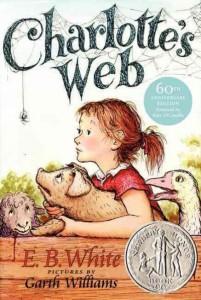
Just Honor material?
Jonathan goaded me in the last paragraph of his P.S. Be Eleven post: ”it has the kind of broad support necessary to go far, but I’m not sure that it’s anything more than . . . wait for it, Nina . . . an Honor book.” He knows I bristle when anyone categorizes a contender as “only” Honor material. But it’s easy to make me bristle, and Jonathan is hardly the only person who thinks about contenders this way. Destinee Sutton said the same of Eruption recently, “ I’d be happy to see this win an Honor, but not the Medal,” and added that “To see this as a Newbery book, I really have to push myself to think outside the traditional Newbery box, which is why I love this blog.”
I have never looked at a contender and thought “I’d be happy to see it win an honor, but not a Medal.” In my mind, a contender is either worthy of a Newbery–gold or silver–or it isn’t… and that gold/silver distinction has to do with how consensual that determination is (imagining the 15 committee members as representative of the critical body for children’s literature…a different post, perhaps). The more consensus, the more “truly” distinguished.
Of course I think I’m right, but I also know enough to know that I’m not right just because I think it. In truth, my perspective has meant that I have to make peace with the medal on books that I’ve felt are “not worthy.” Would it be a more legitimate perspective, “truer” in a way, to recognize more books as “honor worthy” from the get-go?
Wherefore the “honor book?” The Newbery Medal “about” page tells us that:
“From the beginning of the awarding of the Newbery and Caldecott Medals, committees could, and usually did, cite other books as worthy of attention. Such books were referred to as Newbery or Caldecott “runners-up.” In 1971 the term ”runners-up” was changed to “honor books.” The new terminology was made retroactive so that all former runners-up are now referred to as Newbery or Caldecott Honor Books.”
First, it’s interesting to note that “could, and usually did,” and indeed, you’ll notice that conditionality is still in the current terms and criteria: ”Honor books may be named. These shall be books that are also truly distinguished.” The manual clarifies that the first order of business in selecting honor books is to entertain “whether honor books will be named.” (p.41) There were a handful of years in the 1920, the earliest years of the award, when there were no honor books (or runners-up) recorded; but since then there has always been at least one selected. In fact, in the early 1930s there were several years of LOTS of honors, as many as nine…perhaps in response to the years of none? It seems to have leveled out, so that 2-4 honor books are almost expected, but, truly, there may be any number. (There’s always a funny group gasp at the Youth Media Awards announcement when the President says: “in addition, the committee elected to name X honor books.” The gasp is “outlandish” if there are 2, or 4, as if the committee were treading dangerously toward either paucity or greed. There were 5 honor books last in 2003; 1 in 1999, but I can’t recall the sound. Anyone?)
How does the committee select honors? First, you have to be familiar with the committee balloting process to select the winner (p. 40 in the manual):
Balloting:
When there is consensus that all the books on the discussion list are fully discussed, the committee proceeds to a selection ballot. Certain procedures apply:
••• Committee members list first, second, and third place votes for the award on a selection ballot.
••• In tabulating ballot results, the tellers assign four points to each first place vote, three points to each second place vote, and two points to each third place vote.
••• There is a formula to determine the winner. A book must receive at least 8 first choices at four points per vote for a total of at least 32 points, and it must have an 8 point lead over the book receiving the next highest number of points.
If there is no winner in that first ballot, the committee, after discussion, re-ballots until there is. I’m skipping through this part of the manual, but a key point to the honor book discussion is that the committee may withdraw books from the table during re-balloting, and, once withdrawn, they cannot be reintroduced during the honor book discussion. Then,
Selection of Honor Books
Immediately following determination of the winner of the Newbery Medal, and following appropriate discussion, the committee will entertain the following:
• Whether honor books will be named.
• Whether the committee wishes to choose as honor books the next highest books on the original winning ballot or to ballot again.
• If the committee votes to use the award-winning ballot, they must then determine how many honor books to name.
• If the committee chooses to ballot for honor books, only books that received points on the award winning ballot may be included. [emphasis mine] The same voting procedure is followed as for the award winner.
• If the committee has chosen to ballot for honor books, following that ballot, the committee will vote how many books of those receiving the highest number of points are to be named honor books.
So, however it is cut, the honor books are always “the next highest” on a ranked, weighted ballot of titles that were pitched for the winner. What is interesting is that they may be simply the next ones down from that “winning” ballot (indicated that they are, actually, “runners up” in the sense that the voters were staking them toward the gold), or from an “honors” ballot, in which case committee member might now circle slightly different wagons in the play for the silver. And: we won’t ever know. But–and here I finally come all the way round to my bristle about honors–if there is a book that you feel is an “honor” book; yet you (as a real or imaginary committee member) aren’t willing to put it on your ballot for the winner–there is a very good chance that it won’t have a chance at an honor, if no one else votes for it either. Taking the award terms at their most literal–“Honor books may be named. These shall be books that are also truly distinguished.”–I’ve always considered contenders for the Newbery as either distinguished, or not distinguished. ”Does it belong on the winning ballot?” is the way I look at it. And then, it’s the group consensus that makes the gold/silver determination–not me. It’s true that this means I have to come round to accept that books I didn’t feel were distinguished are, actually; but in some ways, honestly, it’s easier for me this way. I don’t have to change my own critical view about a book. It just means I have to admit that I’m not the only one in charge. And, maybe, wrong.


Added To Cart
RELATED


RECOMMENDED
CAREERS
The job outlook in 2030: Librarians will be in demand
CAREERS
The job outlook in 2030: Librarians will be in demand
ALREADY A SUBSCRIBER? LOG IN
We are currently offering this content for free. Sign up now to activate your personal profile, where you can save articles for future viewing
ALREADY A SUBSCRIBER? LOG IN
Thank you for visiting.
We’ve noticed you are using a private browser. To continue, please log in or create an account.
Add Comment :-
Be the first reader to comment.
Comment Policy:
Comment should not be empty !!!