

2018 School Spending Survey Report
As an Oak Tree Grows
illus. by G. Brian Karas. 32p. Penguin/Nancy Paulsen Bks. Sept. 2014. Tr $16.99. ISBN 9780399252334.
COPY ISBN
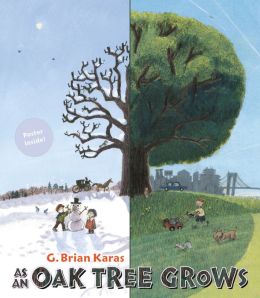
In 1775 a white oak tree sprouts, and for more than two hundred years it stands as a landmark, witnessing two centuries of transformation in American life. Karas's illustrations show the same location every twenty-five years, unobtrusively keeping track with an expanding timeline at the bottom of each double-page spread. Pencil, gouache, and acrylic illustrations allow readers to see how generations alter the landscape.
The year is 1775; the woodland landscape, bordering a peaceful river, is lush with trees. Deer, squirrels, and a fox share the land with a lone wigwam, and a young Native American boy plants an acorn. A white oak tree sprouts, and for more than two hundred years it stands as a sentinel landmark, growing and witnessing two centuries of transformation in American life. Karas's illustrations show the same location every twenty-five years, unobtrusively keeping track with an expanding timeline at the bottom of each double-page spread. Pencil, gouache, and acrylic illustrations allow readers to see how generations alter the landscape: the development of a port and a town; the rise of business and subsequent changes as, for example, a simple garage becomes a mini-mart; and variations in farming practices as well as the development of differing modes of transportation. There are smaller details for observant viewers to consider, such as the bounty of the oak tree: it offers shade, a place to hang a swing, "a quiet place to sit," and, later, firewood and furniture. In 2000, with great drama depicted in deep purple silhouette, a lightning strike destroys the tree. And the next spring an acorn sprouts, beginning the cycle of nature again while continuing the cycle of history. Appended with facts about oak trees. betty carter
ALREADY A SUBSCRIBER? LOG IN
We are currently offering this content for free. Sign up now to activate your personal profile, where you can save articles for future viewing
ALREADY A SUBSCRIBER? LOG IN
Thank you for visiting.
We’ve noticed you are using a private browser. To continue, please log in or create an account.

Be the first reader to comment.
Comment Policy:
Comment should not be empty !!!